Stress-Reduction Techniques Tailored to Escort Work Schedules

Working as an escort doesn’t just mean showing up on time and being charming. It means managing unpredictable hours, emotional labor, safety concerns, and the weight of being constantly ‘on’-often with little support. If you’re doing this job, you know stress isn’t something you can just shake off after a client leaves. It builds up. Slowly. Quietly. Until one day, you’re exhausted, irritable, or just numb. The good news? You don’t have to live like this. There are practical, real-world stress-reduction techniques made for the rhythm of escort work-not generic advice from a yoga app that assumes you sleep at night.
Know Your Body’s Stress Signals
Before you can fix stress, you need to recognize it. For escorts, it doesn’t always look like crying or panic attacks. It shows up as:- Getting angry over small things-like a delayed train or a missed text
- Feeling physically drained even after a full night’s sleep
- Forgetting simple things-names, appointments, where you left your keys
- Avoiding social contact, even with friends you trust
- Using alcohol, food, or scrolling to zone out, then feeling worse afterward
Build a Recovery Routine That Fits Your Schedule
You don’t have 90 minutes to meditate after a 3 a.m. appointment. You need recovery that works between clients, in hotel rooms, or during your 20-minute drive home. Here’s what actually works:- 5-minute breathwork after every client: Sit in your car or hotel room. Breathe in for 4 seconds, hold for 4, exhale for 6. Repeat 5 times. This resets your nervous system faster than caffeine.
- Hydration first, then sleep: Dehydration makes anxiety worse. Keep a water bottle with you. Drink before you even think about checking your phone.
- Set a ‘shutdown ritual’: After your last client, do something that signals your brain: ‘Work is done.’ Put on a specific playlist. Light a candle. Say out loud: ‘I’m done for now.’ This isn’t fluffy-it’s neurological.
- Use your commute as recovery time: Don’t scroll. Listen to audiobooks that have nothing to do with work. Or just sit in silence. Let your mind wander. That’s not wasted time-it’s repair time.
Separate Work Identity from Self
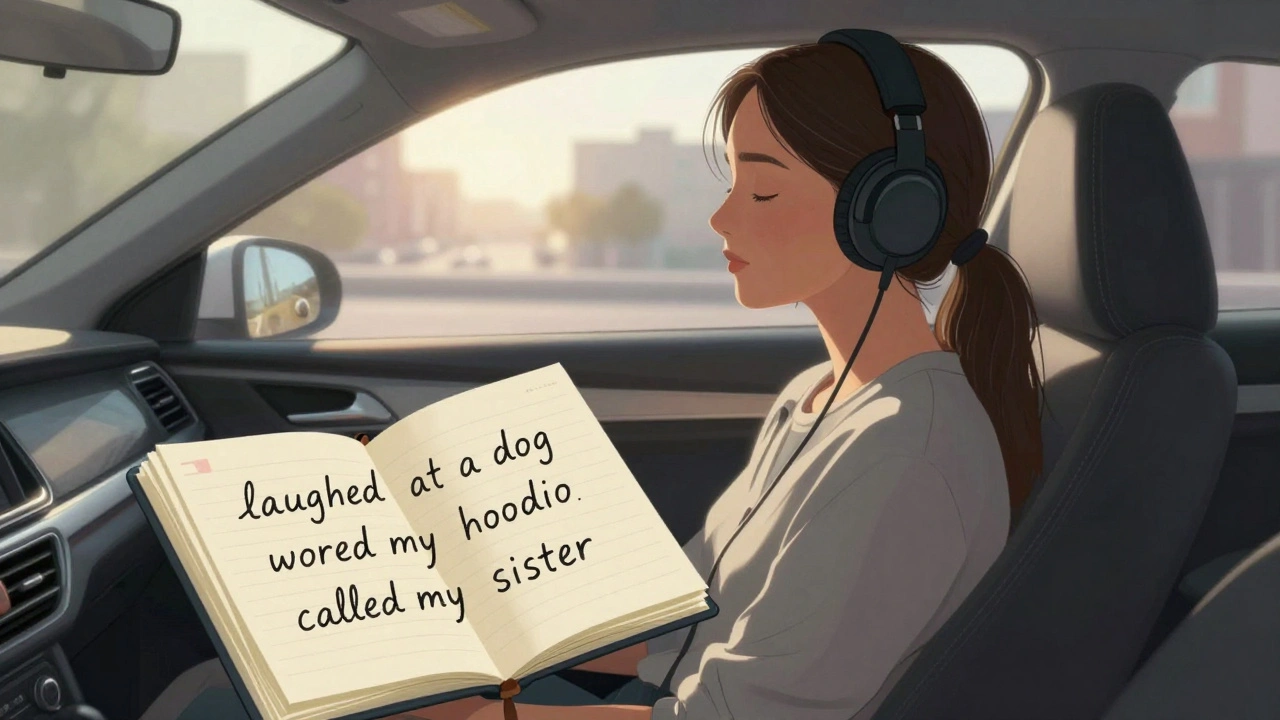
One of the hardest parts of escort work is the blur between who you are and who you’re expected to be. You might feel like you’re constantly performing. That’s exhausting. You need to reclaim your identity outside of the job. Try this: Keep a small notebook-physical or digital-and write down three things you did today that had nothing to do with work. Examples:- Laughed at a dog on the street
- Found a perfect coffee spot
- Called your sister just to say hi
- Wore your favorite hoodie and didn’t care what anyone thought
Control Your Environment, Not Just Your Clients
You can’t control whether a client is rude, late, or demanding. But you can control your space. And that matters more than you think.- Keep a ‘calm kit’ in your bag: A lavender roll-on, a small smooth stone, noise-canceling earbuds, a charged power bank. These are your tools for regaining control in chaotic moments.
- Change your sheets after every booking: Not because of hygiene-though that’s important-but because scent and touch affect your mood. Fresh cotton feels like a reset.
- Use lighting to shift your energy: Bright white light for prep. Soft amber light for wind-down. Your brain responds to light more than you realize.
Connect With Others Who Get It
Talking to friends or family about your work often leads to awkward silence, pity, or advice you didn’t ask for. That’s not your fault. But isolation makes stress worse. Find your people. Not online forums full of drama. Real, quiet, consistent groups. In Brighton, there’s a monthly meet-up for sex workers that’s just coffee and silence. No pressure to speak. No judgment. Some weeks, no one says a word. And that’s okay. If you’re not near a group like that, try:- Private Discord servers for sex workers (search for ones with strict moderation)
- Therapists who specialize in sex work (not just ‘trauma’-they should know the specifics of scheduling, stigma, and autonomy)
- Text groups with 2-3 trusted colleagues. One message a week: ‘I’m holding up.’ That’s enough.
Protect Your Sleep Like It’s Your Job
Sleep isn’t a reward. It’s your fuel. And if you’re working nights or irregular hours, your circadian rhythm is already under stress. Here’s how to protect it:- Wear blue-light-blocking glasses 90 minutes before bed-even if you’re not on your phone. LED lights in hotels and cars mess with melatonin.
- Use the same sleep trigger every time: Same playlist. Same tea. Same position in bed. Your brain needs predictability.
- Nap strategically: If you have a 4-hour gap between bookings, nap for 20 minutes max. Longer than that and you’ll feel groggy.
- Don’t check work messages after 11 p.m.: Even if you think you’re ‘just checking.’ Your brain doesn’t know the difference.
Give Yourself Permission to Say No
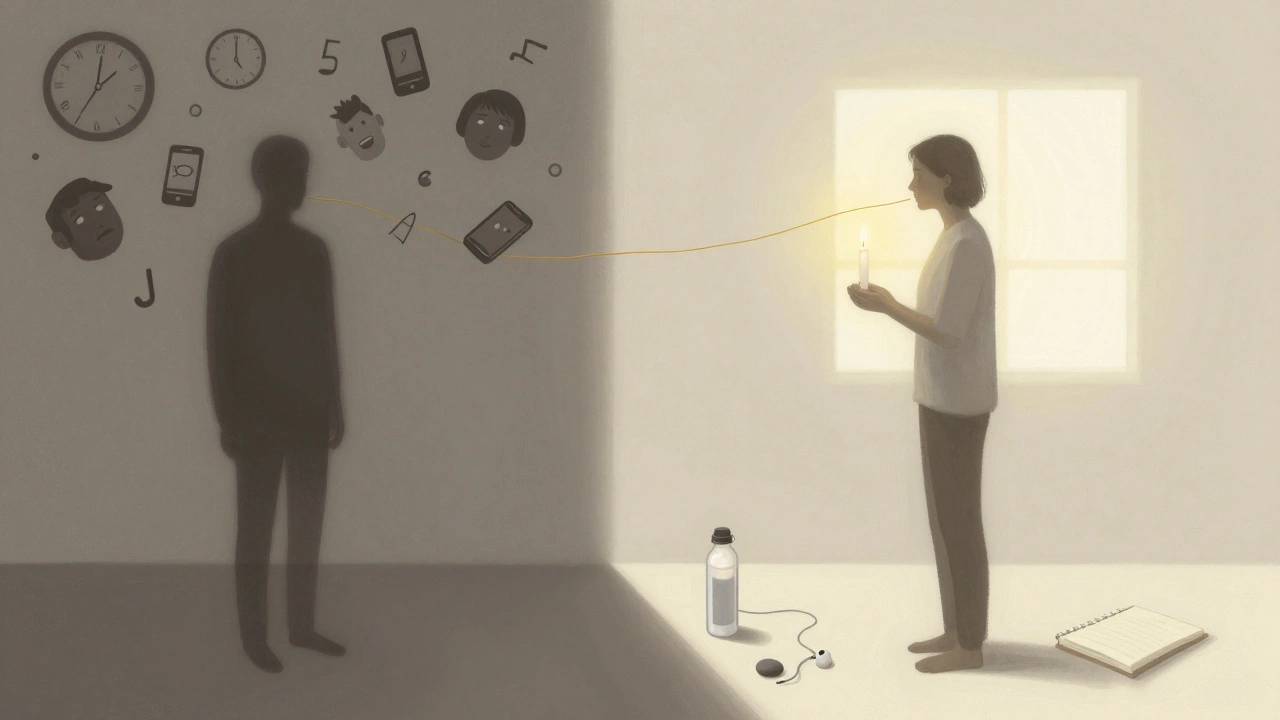
You’ve been taught that saying yes keeps you safe. But the truth? Saying no keeps you alive. You don’t owe anyone your energy. Not a client who wants to extend. Not a manager who pressures you. Not even your own guilt. Practice this phrase: ‘I’m not available for that.’ No explanation. No apology. Just a calm, clear boundary. Start small. Skip a booking you’re not excited about. Turn down a last-minute request. Cancel a meeting you dread. Each time you do this, you rebuild your sense of control. And control is the antidote to chronic stress.What Happens When You Don’t Do This?
Ignoring stress doesn’t make it go away. It just turns it into something worse:- Chronic fatigue that doesn’t improve with rest
- Increased risk of burnout-where you feel nothing, even when you should
- Physical symptoms: headaches, digestive issues, muscle tension
- Emotional detachment-you stop enjoying things you used to love
- Higher chance of risky behavior just to feel something
You’re Not Broken. You’re Operating in a High-Stress System.
You didn’t choose this job because you wanted to be stressed. You chose it because it gave you freedom, income, autonomy. That’s valid. But freedom doesn’t mean you have to suffer alone. Stress-reduction isn’t about becoming a zen master. It’s about building a life that doesn’t break you. Small, consistent actions-breathing, sleeping, setting boundaries, connecting-add up faster than you think. Start with one thing today. Not tomorrow. Not when you have more time. Right now. Drink a glass of water. Put on your headphones. Sit in silence for five minutes. That’s your first step. You’ve survived this long. Now it’s time to thrive.Can stress from escort work lead to long-term mental health issues?
Yes, if left unmanaged. Chronic stress without recovery can contribute to anxiety, depression, or burnout. But it’s not inevitable. Many escorts maintain strong mental health by using consistent, tailored coping strategies-like scheduled downtime, therapy, and peer support. The key isn’t avoiding stress; it’s building systems to recover from it regularly.
Is therapy helpful for escorts dealing with stress?
Absolutely-if you find the right therapist. Look for someone who understands sex work as a legitimate profession, not just a ‘trauma narrative.’ Therapists trained in trauma-informed care or sex-positive therapy can help you process emotional labor, set boundaries, and rebuild self-worth without judgment. Many offer sliding scales or online sessions for flexibility.
How do I deal with stress after a difficult client?
First, get to a safe space. Then, use your shutdown ritual: change clothes, wash your face, listen to a favorite song. Avoid replaying the interaction. Instead, write down one thing you did well-even if it was just staying calm. Then, do something that reminds you you’re more than your work: call a friend, eat a meal you love, walk barefoot on grass. Your body needs to feel safe again.
Can I use meditation if I have an irregular schedule?
Yes-but don’t aim for 20-minute sessions. Micro-meditations work better. Try 60 seconds of focused breathing before a booking, or while waiting in your car. Use apps like Insight Timer that offer 1-5 minute guided practices. Consistency matters more than duration. Five 60-second breaths a day is more effective than one 10-minute session you never repeat.
What’s the fastest way to reduce stress after a long day?
Physical movement. Shake out your arms. Jump up and down for 30 seconds. Dance to one song. Stretch your neck and shoulders. Movement releases stored tension faster than talking or thinking. Your nervous system responds to physical release. Do this before you check your phone or collapse on the bed.
Next steps: Pick one technique from this list and try it tomorrow. Not tomorrow tomorrow-tomorrow. Write it down. Do it. Then, in a week, ask yourself: Did this make a difference? If yes, add another. If no, try something else. There’s no perfect system. Only the one that works for you.