Balancing Privacy and Promotion in Adult Work Dubai

Working in adult services in Dubai isn’t like working in London or Amsterdam. The rules aren’t written in a handbook you can download-they’re carved into local law, cultural norms, and the quiet understanding that discretion isn’t optional, it’s survival.
What You Can’t Say Out Loud
Dubai doesn’t legally permit commercial sex work. That means every ad on AdultWork, every message sent through encrypted apps, every meeting arranged in a hotel lobby happens in a legal gray zone. You’re not breaking the law by advertising-you’re breaking it by meeting. The line is thin, and the consequences are real: fines, deportation, even jail time for foreigners. Many who work here don’t see themselves as criminals. They see themselves as freelancers trying to make a living in a city that won’t acknowledge their work exists.So how do you promote yourself without getting caught? You don’t post your face. You don’t mention your apartment. You don’t use your real name. You don’t say "escort"-you say "companion," "consultant," or "personal assistant." The language is coded, not because it’s clever, but because it’s necessary. One woman who worked under the name "Lina" told me she changed her profile every three weeks. Her photos were taken in different cities. Her bio changed tone depending on the day. She never used the same wording twice. "If they find a pattern," she said, "they find you."
Privacy Isn’t a Feature-It’s Your Shield
Privacy in Dubai isn’t about being mysterious. It’s about staying invisible. Your phone number? Use a burner. Your bank account? Don’t link it to your real name. Your Uber rides? Always use cash. Even something as simple as posting a photo from a rooftop in Downtown Dubai can be traced back to you through metadata, geotags, or a background building someone recognizes.One escort I spoke with used a friend’s apartment in Jebel Ali as her meeting spot. She never stayed overnight. She arrived in a taxi that dropped her off three blocks away. She walked the last stretch, changed her clothes in a public restroom, and left the same way. She didn’t use Wi-Fi at the location. She didn’t check in anywhere. She didn’t even use her real ID when renting a hotel room-she used her passport under a different spelling of her name, one she’d used for years.
Apps like Signal and Telegram are essential. But even those aren’t foolproof. In 2024, UAE authorities started using AI to scan public-facing social media profiles for keywords linked to adult services. "Date," "night," "luxury," "private," "exclusive"-these words trigger alerts. One woman lost her visa after a photo of her wearing a red dress at a party was flagged because the caption said, "Best night ever." The system didn’t know who she was. But it knew the context.
Marketing Without a Platform
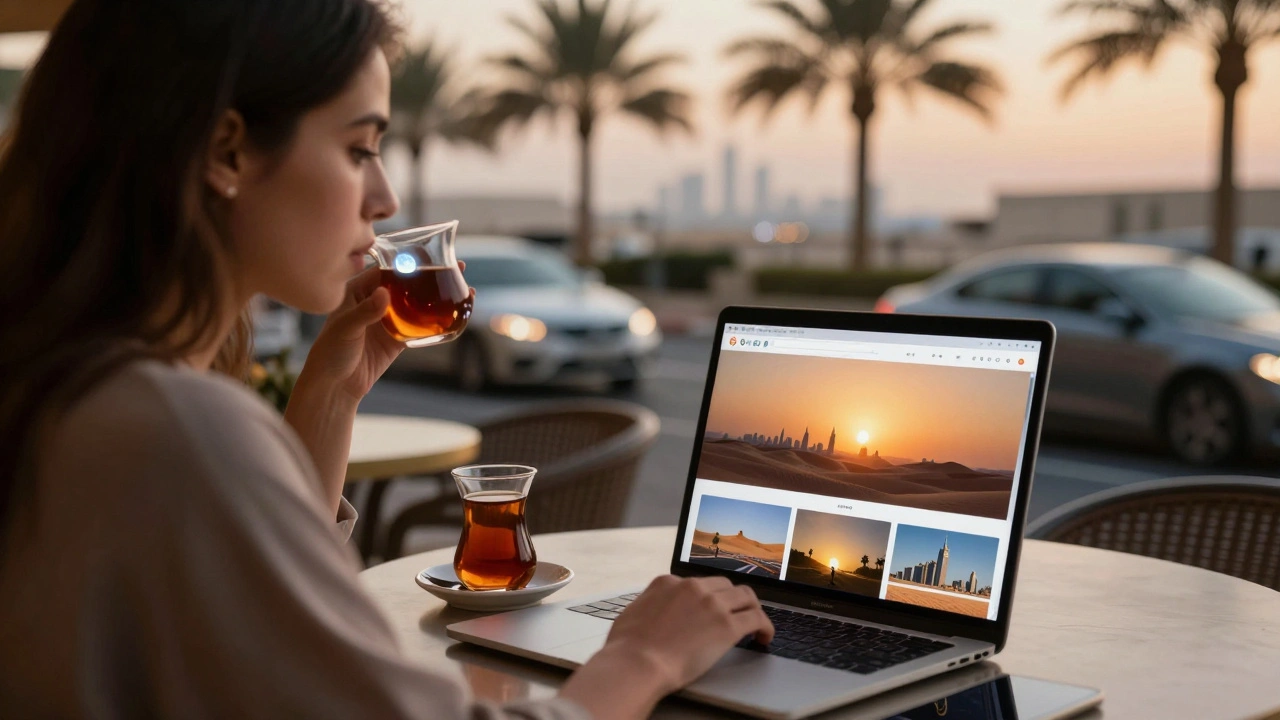
AdultWork is the only semi-public platform where you can list services in Dubai. But even there, you’re walking a tightrope. The site doesn’t require ID verification, but UAE law still applies. Your profile can be reported. Your IP can be traced. Your payment method can be flagged.Most successful workers in Dubai don’t rely on one channel. They use a mix: private Telegram groups, word-of-mouth referrals from trusted clients, and discreet Instagram accounts with no location tags and no captions. One woman built a following by posting travel photos-Dubai skyline at sunset, desert dunes, luxury hotel lobbies-with no mention of her work. Only people who knew her from previous interactions would message her directly with a code word: "Can you recommend a good spa?"
She never responded publicly. She never replied to strangers. She waited for the right person to reach out. And when they did, she asked for their name, their reason for contacting her, and how they found her. If the answer felt off, she didn’t reply. If it felt right, she sent a single emoji: a moon. That was the green light.

Payment Without a Paper Trail
You can’t use your bank account. You can’t use PayPal. You can’t even use Apple Pay if it’s linked to your real identity. Most workers in Dubai use cash. But cash is risky-it’s traceable if you’re caught with it, and it’s hard to prove you earned it legally.Some use cryptocurrency, but not Bitcoin. Bitcoin is too public. Instead, they use Monero or Zcash-coins designed for privacy. Transactions are untraceable. No KYC. No receipts. One worker told me she set up a wallet under a pseudonym and only withdrew funds once a month, always at a different ATM in a different emirate. She never used the same card twice. She never used the same time of day.
Others use gift cards. A client pays $500 in Amazon UAE gift cards. She sells them for cash at a local exchange shop that doesn’t ask questions. She gets $400 in cash. She keeps the rest as profit. It’s not elegant, but it’s clean.
Who You Work With Matters More Than What You Do
In Dubai, your safety isn’t about your profile. It’s about your network. The people you trust. The ones who’ve been here longer. The ones who know which hotels are safe, which security guards turn a blind eye, which police stations won’t respond to anonymous tips unless there’s a complaint.There’s a small, unspoken community. Not a group chat. Not a forum. Just a few women who’ve been around long enough to know who to call when something goes wrong. One woman got arrested in 2023 after a client reported her. She was released within 24 hours-not because she was innocent, but because someone else in the network called a lawyer who knew the right judge. That lawyer didn’t work for free. He got paid in gift cards and a favor: "Next time you’re in Abu Dhabi, take care of my cousin."
What Happens When It Ends
Most people don’t stay in Dubai forever. The pressure is too high. The isolation is too deep. The fear never goes away. When they leave, they don’t just pack their bags. They erase everything.They delete their profiles. They wipe their phones. They close email accounts they’ve used for years. They change their names legally if they can. Some move to countries where adult work is legal and start over. Others disappear into regular jobs-teaching English, working in hospitality, running small online businesses. One woman I met in Bangkok last year used to work in Dubai under three different names. Now she runs a yoga studio. She doesn’t talk about her past. But sometimes, when she’s alone, she says she still checks her old email address once a month. Just in case.
It’s Not About Freedom-It’s About Survival
Working in adult services in Dubai isn’t about glamour. It’s not about luxury cars or designer clothes. It’s about surviving a system that refuses to recognize you exist. It’s about finding ways to earn money without getting caught. It’s about knowing when to walk away, when to say no, when to disappear.If you’re thinking about starting here, know this: you’re not building a brand. You’re building a ghost. And ghosts don’t get vacations. They don’t get health insurance. They don’t get to say their name out loud.
But if you’re already here? You’re not alone. And you’re not powerless. You just have to be smarter than the system trying to catch you.
Is it legal to advertise adult services on AdultWork in Dubai?
Advertising on AdultWork isn’t technically illegal in Dubai, but it’s a legal risk. The platform itself doesn’t violate UAE law, but any activity that follows-like meeting a client, exchanging money, or providing services-is against the law. Authorities monitor these listings closely, and even a profile can lead to investigations if it’s reported or flagged by AI tools.
Can I use my real name on AdultWork if I work in Dubai?
No. Using your real name increases your risk dramatically. Your identity can be linked to your profile through payment details, IP addresses, or even photos. Many workers use pseudonyms, avoid personal details, and never mention their nationality or residence. Even small details-like mentioning a neighborhood or a hotel chain-can be used to trace you.
How do workers in Dubai handle payments safely?
Cash is the most common method, but it’s risky. Many use cryptocurrency like Monero or Zcash for untraceable transactions. Others use gift cards (Amazon UAE, Noon, or Apple) that can be sold for cash at local exchange shops. Avoid bank transfers, PayPal, or any digital payment linked to your real identity. Never deposit earnings into an account under your name.
What should I do if I’m approached by police in Dubai?
Stay calm. Do not resist. Do not lie. Do not volunteer information. You have the right to remain silent. If you’re a foreigner, ask to contact your embassy. Do not sign anything without legal advice. Many workers have been detained for hours or days before being released-often without charges. Having a trusted contact who knows a local lawyer can make a difference.
Can I work in Dubai if I’m not a citizen?
Yes, but you’re at higher risk. Foreigners can be deported even if they’re not charged with a crime. Visa violations are taken seriously, and working in adult services-even discreetly-can lead to permanent bans. Many workers on tourist or freelance visas are unaware of how strictly enforcement can be applied. If you’re not a citizen, assume every interaction is being monitored.
How do I know if a client is safe in Dubai?
Trust your instincts, but also use verification. Ask for their full name, job title, and how they found you. Check their profile on AdultWork-if they have one, look for consistency. Avoid clients who insist on meeting in private homes or remote areas. Always meet in public places first. Share your location with a trusted friend. Never go alone if you’re unsure. Many workers use a code word system: if you send "I’m running late," your friend knows to call you in 15 minutes.